Lead Acid FAQs
Questions answered about lead acid batteries
Find answers to many common questions related to Trojan deep cycle flooded lead acid, AGM, and Trojan AES AGM batteries. Find answers to commonly asked questions about Trojan lithium-ion batteries on our lithium battery FAQs page.
Measurement & Troubleshooting
To determine if the battery in a system is experiencing a problem, disconnect all electrical loads, fully charge the batteries then disconnect all charging sources. Allow each battery in the system to stand on open-circuit for about one hour. Measure the voltage of each battery.
If the battery voltage spread exceeds .15 volts for a 6-volt battery, or .22 volts for a 12-volt battery, a problem is indicated. Battery voltage alone does not confirm a problem. When the voltage spread indicates a problem, you can confirm the problem by taking electrolyte specific gravity readings using a hydrometer. If the specific gravity readings show a spread greater than .030 (30 points), give the batteries an equalization charge and re-test.
The state of charge of a lead acid battery is most accurately determined by measuring the specific gravity of the electrolyte. This is done with a hydrometer. Battery voltage also indicates the level of charge when measured in an open circuit condition. This should be done with a voltmeter. For an accurate voltage reading, the battery should to rest for at least one hour, to let the voltage stabilize.
For flooded batteries, 22 degrees from vertical is the maximum recommended tilt. AGM batteries can be operated vertically or horizontally.
You will reduce the frequency of watering, but will cause a condition known as stratification, which means the specific gravity of the electrolyte is light at the top of the battery and heavy at the bottom. This condition results in poor performance and reduced battery life.
A solution of baking soda and water. Use 1 cup of baking soda for every gallon of water.
A hydrometer reading of 1.277 or greater indicates full charge for most Trojan batteries. This value is based upon a specified temperature of 80°F (27°C). For temperature correction values, see the Temperature FAQ section of this page.
To determine the date of manufacture, refer to the date code on the negative terminal or on the cover near the negative terminal. It consists of a letter and a number. The letter refers to the month and the number refers to a year. Example: A1 = January 2021, B1 = February 2021, . . . L1 = December 2021. A2 = January 2022, B2 = February 2022, . . . L2 = December 2022, etc.
Battery Ratings
The 100-hour rate is an index used in the battery industry to compare batteries of different types and sizes. The 100-hour rate is the amount of Amp hours (Ahs) the battery will deliver during a 100-hour discharge. The capacity of a battery, in Ahs, is a dynamic number that is dependent on the discharge current.
For example, a battery that is discharged at 10Ahs will give you more capacity than a battery that is discharged at 100Ahs. With the 100-hr rate, the battery can deliver more Ahs than with the 20-hr rate because the 100-hr rate uses a much lower discharge current than the 20-hr rate. Both rates are used as baselines in different parts of the world. Both rates, however, will give you the same view of a battery. A higher capacity battery will have higher 5- and 20-hour rates than a battery with lower capacity.
Battery Charging
Equalizing should be performed when a battery is first purchased (also called a freshening charge) and on a regular basis or as needed. How often your battery will require an equalization charge will vary depending on your application. You will need to monitor your battery voltage and specific gravity to determine when equalization is needed.
For example, it is time to equalize if the measured specific gravity (SG) values are below manufacturer’s recommended values after charging (recommended value for Trojan deep cycle batteries is 1.285 +/- .007 at 80ºF (27ºC)).
Equalizing is also required if the SG of any individual cell varies by 30 points or more. Reduced performance can also be an indicator that equalizing is necessary. Equalization should be performed when individual battery voltages in a battery pack range greater than 0.15 volts for 6-volt batteries or 0.30 volts for 12-volt batteries.
Lead acid batteries do not develop any type of memory. This means that you do not have to deep discharge or completely discharge a battery before recharging it. For optimum life and performance, we generally recommend a discharge of 20 to 50% of the batteries rated capacity even though the battery is capable of being cycled to 80%.
Battery Temperatures and Effects
At higher temperatures (above 80ºF (27ºC)) battery capacity generally increases, usually at the cost of battery life. Higher temperatures also increase the self-discharge characteristic.
Colder temperatures (below 80ºF (27ºC)) will lower battery capacity and prolong battery life. Cooler temperatures will slow self-discharge. Operating batteries at temperatures at or slightly below 80ºF (27ºC) will optimize both performance and life.
Battery capacity is basically a linear relationship. A good rule of thumb is that for every 15ºF (9ºC) above 80ºF (27ºC), capacity is increased by 10% and for every 15ºF (9ºC) below 80ºF (27ºC), capacity is reduced by 10%.
Temperature affects specific gravity (SG) readings. As temperature increases, the electrolyte solution expands and as temperature decreases the electrolyte solution contracts. As a result, it is a good practice to temperature correct SG readings.
Trojan recommends that for every ten degrees above 80ºF (27ºC) add 4 points to the hydrometer reading. And for every ten degrees below 80ºF (27ºC), subtract 4 points from the hydrometer reading.
- Example: At 90ºF (32ºC) the hydrometer reads: 1.250 the actual reading: 1.250 + .003 = 1.253.
- Example: At 70ºF (21ºC) the hydrometer reads: 1.250 the actual reading: 1.250 – .003 = 1.247
Temperature will affect voltage readings. As temperature increases, voltage decreases. Conversely, as temperature decreases, voltage increases.
Trojan recommends:
- For every 1ºF below 77ºF add 0.0028 volts per cell or for every 1ºC below 25ºC add 0.005 volts per cell to the charger voltage setting.
- Example: A 12 volt battery at 70ºF. The recommended charging voltage at 77ºF is 14.8 volts. The adjusted charging voltage is 14.8 + (6 cells * 7 degrees below * 0.0028) = 14.92 volts.
- Example: A 12 volt battery at 21ºC. The recommended charging voltage at 25ºC is 14.8 volts. The adjusted charging voltage is 14.8 + (6 cells * 4 degrees below * 0.005) = 14.92 volts.
- For every 1º F above 77º F subtract 0.0028 volts per cell or for every 1ºC above 25ºC subtract 0.005 volts per cell to the charger voltage setting.
- Example: A 12 volt battery at 85ºF. The recommended charger voltage at 77ºF is 14.8 volts. The adjusted charging voltage is 14.8 – (6 cells * 8 degrees above * 0.0028) = 14.67 volts.
- Example: A 12 volt battery at 29.5ºC. The recommended charger voltage at 25ºC is 14.8 volts. The adjusted charging voltage is 14.8 – (6 cells * 4.5 degrees above * 0.005) = 14.67 volts.
When charging lead acid batteries, the temperature should not exceed 120ºF. At this point the battery should be disconnected from all charging sources and loads and given time to cool before resuming the charge process.
Specific Gravity and Lead Acid Batteries
A hydrometer reading of 1.277 or greater indicates full charge for most Trojan batteries. This value is based upon a specified temperature of 80°F (27°C). For temperature correction values, see the Temperature FAQ section of this page.
Temperature affects specific gravity (SG) readings. As temperature increases, the electrolyte solution expands and as temperature decreases the electrolyte solution contracts. As a result, it is a good practice to temperature correct SG readings.
Trojan recommends that for every ten degrees above 80ºF (27ºC) add 4 points to the hydrometer reading. And for every ten degrees below 80ºF (27ºC), subtract 4 points from the hydrometer reading.
- Example: At 90ºF (32ºC) the hydrometer reads: 1.250 the actual reading: 1.250 + .003 = 1.253.
- Example: At 70ºF (21ºC) the hydrometer reads: 1.250 the actual reading: 1.250 – .003 = 1.247
Yes, Trojan changed SG values of the Premium Line in March 2012 to avoid confusion over correct SG values for the premium and signature lines of flooded batteries. This change does not have any impact on life cycle performance. Trojan Premium Line batteries manufactured prior to March, 2012 have a nominal SG of 1.260 while those produced after March 2012 have a nominal SG of 1.280.
Watering Flooded Batteries
Water is lost when flooded batteries are charged. The best time to water your batteries is always at the end of the charge cycle. However, if the plates are exposed to air, add just enough water to cover the plates before starting the charge cycle. When the charging process is complete, re-check the electrolyte and top off as needed.
It is best to check your new batteries regularly as this will give you a good sense of how often your application will require battery watering. WARNING: A brand new battery may have a low electrolyte level. Charge the battery first and then add water if needed. Adding water to a battery before charging may result in overflow of the electrolyte.
Yes, de-ionized water can be used instead of distilled water. However, distilled water is preferred because although de-ionized water has all free ions removed, it may still contain some minerals that may be harmful to the battery. In addition, distilled water is generally more available than de-ionized water.
Liquid levels should be 1/8 inch below the bottom of the vent well (the plastic tube that extends into the battery). The electrolyte level should not drop below the top of the plates.
The only way a battery can freeze is if it is left in a state of partial or complete discharge. As the state of charge in a battery decreases, the electrolyte becomes more like water and the freezing temperature increases. The freezing temperature of the electrolyte in a fully charged battery is -92ºF (-69ºC). At a 40% state of charge, electrolyte will freeze if the temperature reaches approximately 16ºF (-9ºC).
It is completely normal for flooded batteries to lose water. They lose water because of the gassing that they go through with every charge. Gassing is an important part of the recharge process. Gassing allows the electrolyte to mix well and helps the battery get back to a fully charged state at the end of the charge process.
Gassing also causes water to be lost. Water should only be added once batteries are fully charged as the electrolyte levels vary as a function of state of charge and are highest once the batteries are fully charged.
Additives & External Components
Trojan Battery, as well as other battery manufacturers, does not recommend adding anything to your batteries other than distilled water. Extensive testing has shown that most of these additives do not work as advertised; in fact, some may do a significant amount of harm. Be aware that adding anything other than water to your batteries will void the warranty.
We don’t recommend the use of desulfators or any other external device, as they tend do a significant amount of harm. No external device or chemicals need to be added to our products—only distilled water.
Under normal operating conditions, you never need to add acid. Only distilled, deionized, or approved water should be added to achieve the recommended levels.
Selecting a Battery
Proper battery selection may require the assistance of a knowledgeable battery sales/service technician. Contact your local Authorized Trojan Dealer or call us at 1-800-423-6569 or 562-236-3000.
A deep cycle battery has the ability to be deeply discharged and charged many times during its service life. It is designed specifically for powering electrical equipment for long periods of time. An automotive or starting battery is designed for brief bursts of high current and cannot withstand more than a few deep discharges before failure. This is why you can't start your car if you accidentally leave the lights on more than a few times.
For applications where both engine starting and light deep cycling are required, a dual-purpose battery is often used. This type of battery is neither a starting nor a deep cycle battery but rather a compromise between the two that allows it to perform both functions adequately. Only deep cycle batteries should be used in renewable energy applications.
Systems with loads greater than 100 watts continuous will be better served by higher voltages such as 24V and 48V. This is due to the reduced size of wiring required to minimize voltage drop, which impacts overall system cost and ease of installation.
The composition of the plate grid alloy can have a major effect on operating characteristics, such as behavior on float charging and cycle life.
- Older lead antimony designs have good cycling capability but require frequent water additions, particularly towards the end of life, due to antimony migration between the plates.
- Cells with lead calcium alloys require far less watering, but tend to have a poor cycle life.
- Lead selenium alloys are actually low-antimony types with the addition of selenium as a hardening agent. Such alloys promote good cycling capability, while maintaining a constant and fairly low level of water consumption.
Many variants on these alloy types are commercially available.
Lead Acid Battery Recycling
Lead acid batteries are 99% recyclable.
Lead is the most recycled metal in the world today. All lead purchased by Trojan Battery for grid and small parts casting is recycled. The plastic containers and covers of old batteries are neutralized, reground and used in the manufacture of new battery cases. The electrolyte can be processed for recycled wastewater uses. In some cases, the electrolyte is cleaned and reprocessed and sold as battery grade electrolyte. In other instances, the sulfate content is removed as ammonia sulfate and used in fertilizers. The separators are often used as a fuel source for the recycling process.
Old batteries may be returned to the battery retailer, automotive service station, a battery manufacturer or other authorized collection centers for recycling. If you are not sure where to take your spent batteries, visit our Recycling page or contact your local Authorized Trojan Dealer for assistance.
Common Battery Mistakes & Myths
- Undercharging: Continually operating the battery in a partial state of charge, or storing the battery in a discharged state results in the formation of lead sulfate compounds on the plates (called sulfation). Both of these conditions reduce the battery’s performance and may cause premature battery failure. Undercharging will also cause stratification, where the sulfuric acid begins to concentrate at the bottom of the battery and increases the build-up of lead sulfate.
- Overcharging: Continuous charging causes accelerated corrosion of the positive plates, excessive water consumption, and in some cases, damaging temperatures in a lead acid battery.
- Under watering: In flooded batteries, water is lost during the charging process. If the electrolyte level drops below the tops of the plates, irreparable damage may occur. Water levels should be checked and maintained routinely.
- Over-watering: Excessive watering of a battery results in additional dilution of the electrolyte, which leads to reduced battery performance. Additionally, watering the battery before charging may result in electrolyte overflow and unnecessary additional maintenance.
- MYTH: Adding half a non-buffered aspirin in each cell and then performing a fast charge breaks up sulfation and extends battery life. Aspirin forms ascetic acid which attacks the positive grid and active material.
- MYTH: Storing a battery on concrete will discharge it quicker. When battery cases were made from natural rubber, this was true. Today's battery cases are made of polypropylene or other modern materials that allow a battery to be stored anywhere. A battery’s rate of discharge is affected by its construction, its age, and the ambient temperature. The main issue with storing on concrete is that if the battery leaks, the concrete will be damaged.
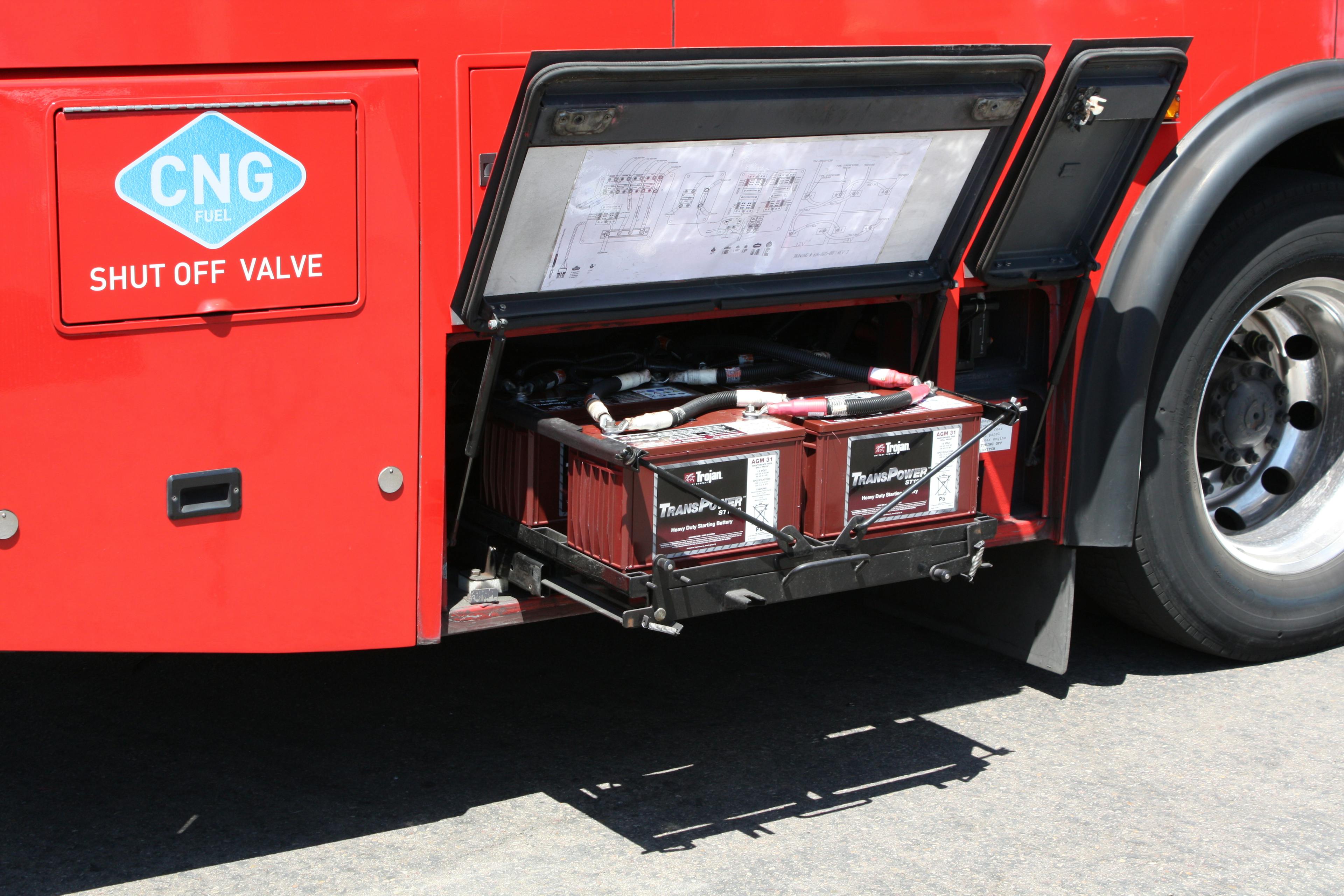
Battery maintenance
Consistent care and maintenance will optimize battery performance and ensure long life. Learn how to care for Trojan batteries.