



Trojan AES AGM Batteries
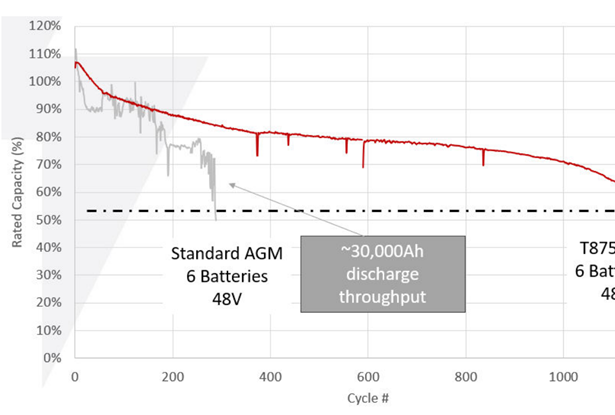
Learn about Trojan's advanced absorbed glass mat technology. Designed to deliver up to 3x the cycle life of standard AGM batteries.
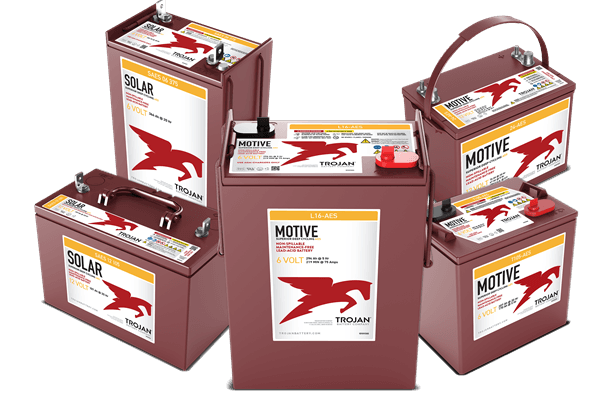
AES AGM Battery Maintenance
Trojan AES AGM and standard AES batteries are sealed, valve-regulated lead acid batteries. Long-lasting and high-performing even in extreme temperatures, they are a popular choice for hardworking equipment due to their versatility and reliability.
Optimize your experience with Advanced Energy Storage AGM batteries
Learn from Trojan experts how to get the most from your Trojan AES AGM and standard AGM batteries, including tips for installation, charging, storage, cleaning, and more.
Choosing AES AGM and Standard AGM Batteries
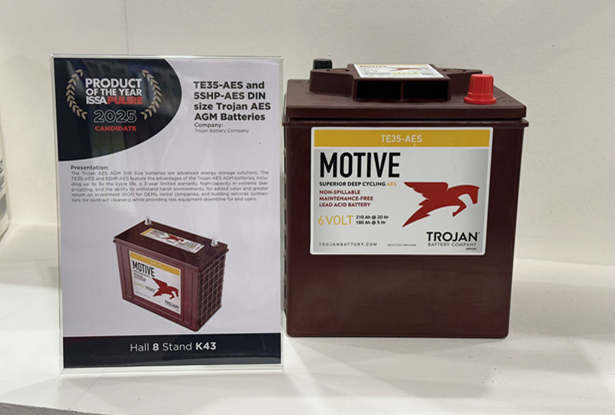
AES AGM vs. AGM batteries
A great battery design requires high grade components, the right amount of those components, and the proper processes of manufacturing (putting all of the components together).
Trojan AES is an advanced AGM battery technology that uses the proper ratio of alloys for optimized grid design and higher purity of lead for optimal paste design.
Choosing an AES AGM lead acid model
When choosing an AES AGM or standard AGM battery, consider the equipment battery compartment space that the battery will go into, as this may limit your options.
Next, consider your energy needs. If you are replacing an existing battery, use it as a reference point. If your old battery provided enough energy, it can be replaced with a similar capacity battery. If you need more energy you can size up, or if you need less energy you can size down.
The differences between deep cycle batteries, starting batteries, and dual-purpose batteries
A deep cycle battery can be deeply discharged and charged many times during its service life. It is designed specifically for powering electrical equipment for long periods of time.
An automotive or starting battery is designed for brief bursts of high current. It cannot withstand more than a few deep discharges before failure. This is why you can't start your car if you accidentally leave the lights on more than a few times.
For applications where both engine starting and light deep cycling are required, a dual-purpose battery is often used. This type of battery is neither a starting nor a deep cycle battery but rather a compromise between the two that allows it to perform both functions adequately.
Understanding battery ratings and amp-hours
The battery industry uses 100-hour rate as an index to compare batteries of different types and sizes. The 100-hour rate is the amount of Ampere-hours or Amp hours (Ahs) that a battery will deliver during a 100-hour discharge.
The capacity of a battery, in Ahs, is a dynamic number that is dependent on the discharge current. For example, a battery that is discharged at 10Ahs will give you more capacity than a battery that is discharged at 100Ahs.
With the 100-hr rate, the battery can deliver more Ahs than with the 20-hr rate because the 100-hr rate uses a much lower discharge current than the 20-hr rate.
Both rates are used as baselines in different parts of the world. Both rates, however, will give you the same view of a battery. A higher capacity battery will have higher 5- and 20-hour rates than a battery with lower capacity.
Interested in learning more?
Replacing AES AGM batteries in your equipment
We do not recommend partial battery replacement of AES batteries.
The behavior of batteries during discharging and charging varies throughout their lifespan; if all the batteries are the same age, they all will have similar responses.
The danger with replacing only one battery is that the older batteries will tend to require more charge than the newer ones. Since the new batteries are in the same circuit, they will be overcharged.
There is also the chance that the older batteries will be undercharged since the overall voltage response of all the batteries (old and new) will not be a good representation of either group. The charging system might erroneously detect that ALL the batteries have reached the desired voltage. This may cause the battery charging to stop before completed.

How do I find batteries that are compatible with my equipment?
Trojan’s Battery Finder online tool helps you find all the Trojan battery options for your golf cart, floor scrubber, industrial equipment, and other battery-powered machinery.
Look up your equipment’s manufacturer and model in the Trojan Battery Finder >
Installation, Maintenance & Cleaning for AES AGM Lead Acid Batteries
How to install AES AGM batteries
Unlike flooded batteries, Trojan AES batteries may be placed and installed upright or on their sides. AES AGM and standard AGM batteries can be placed in a standard vertical (terminals on top) or optional horizontal (terminals in front) orientation.
If placed in a horizontal orientation, the batteries should be placed on their long sides and NOT their short ends.
Recommended equipment:
Goggles
Gloves
Protective clothing
Insulated tools
Battery charger
Baking soda
Ventilation
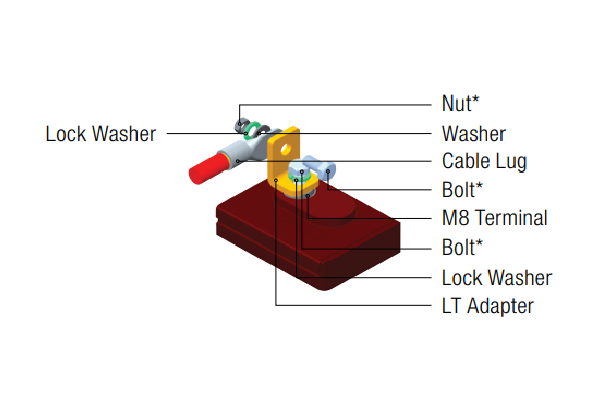
Terminals and cables
If using washers to connect the wire connections, ensure the connection is in direct contact with the lead surface of the terminal.
Ensure the washer is placed on top of the wire connection (between the connection and the nut). Do not place the washer between the terminal and the connection as this creates high resistance and can cause terminal meltdown.
Keep terminals clean and dry to avoid corrosion. Terminal protector spray is recommended.
Torque values for AES AGM battery terminals
Tighten all cable connections to the specified torque values, ensuring proper contact with the terminals. Over-tightening can result in terminal breakage and loose connections, which may result in meltdown or fire.
| AES AGM Battery Terminal Type | Dry Torque (in-lb) | Dry Torque (Nm) |
|---|---|---|
| M8 | 85-95 | 10-11 |
| AP (Adapter) Motive AES / AGM with C-Max | 50-70 (AP Connector) 95-105 (AP Adapter) | 6-7 (AP Connector) 11-12 (AP Adapter) |
| AP | 44-62 | 5-7 |
| DT | 50-70 (AP Connector) 95-105 (Stud Portion) | 6-7 (AP Connector) 11-12 (Stud Portion) |
| LT (Adapter) | 50-70 (Nut) 95-105 (Bolt) | 6-8 (Nut) 10-11 (Bolt) |
| M6 | 25-35 | 3-4 |
| ST | 120-180 | 14-20 |
Inspecting your Trojan AES AGM Batteries
Inspect AGM and AES AGM batteries at regular intervals. The tops of the batteries and the terminal connections should be clean, dry, and free of dirt or corrosion.
If fluid is present on the top of a deep cycle AES AGM or AGM battery, it may mean that the battery is being overcharged, which can reduce battery performance and life.
Check battery cables and connections. Replace any damaged cables and tighten any loose connections.
Maintenance
Trojan AES batteries do not have free flowing electrolyte or removable vents and lose very little water during charging.
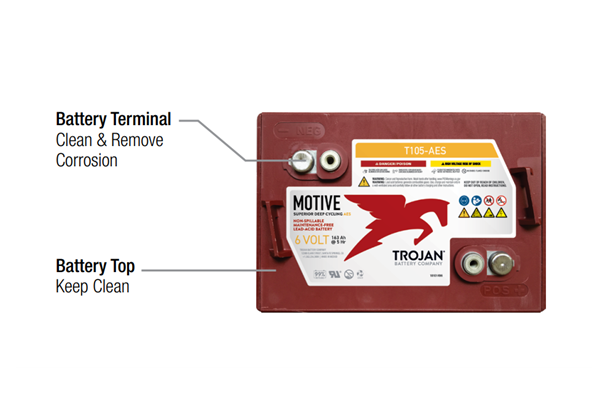
Because of their construction, Trojan AES AGM batteries are considered non-spillable and maintenance-free since no watering is required.
WARNING: Water should NEVER be added to deep cycle Trojan AES AGM batteries. Do not attempt to remove vent caps for any reason.
Cleaning
Clean the top of the battery, terminals and connections with a cloth or brush and a sodium bicarbonate solution (1 cup of baking soda to 1 gallon of water (150g/1L)).
Rinse with water and dry with a clean cloth.
Keep the area around batteries clean and dry.
Charging and Discharging AGM and AES AGM Batteries
Proper charging will maximize battery performance. Both under- and over-charging can reduce the life of the battery.
Trojan AES AGM Batteries maintain high capacity in extreme deep cycling. However, we recommend you not discharge your battery more than 80%.
Due to the potential for self-discharge during shipping and storage, batteries should be given a full charge prior to first use. See the next section for details on proper charging.
Charging AES AGM and standard AGM batteries
Proper charging is imperative to maximize battery performance. Both under- or over-charging batteries can significantly reduce the life of the battery. Most chargers are automatic and pre-programmed, while others are manual and allow the user to set the voltage and current values.
Charge only in well-ventilated areas.
Batteries should be fully charged after each use. “Use” is defined as 30 minutes or more of runtime.
Before charging, make sure the charger is set to the appropriate program for deep cycle flooded/wet or AES / AGM batteries.
Charging time will vary depending on battery size, charger output, and depth of discharge.
Lead-acid batteries do not have a memory effect and should not be fully discharged prior to charging.
Temperature compensated charging is desirable for all batteries, but should always be used with AES AGM and standard AGM batteries. Temperature compensation coefficients raise the voltage/cell for temperatures below 77°F (25°C), and lower the voltage/cell for temperatures above 77°F (25°C).
Never charge a frozen battery.
Avoid charging at temperatures above 122°F (50°C).
Trojan AES AGM Batteries Normal Charging Parameters @ 25°C (77°F)
| Trojan Battery Line | Maximum Charge Current (% of C20) | Maximum Absorption Phase Time (Hours) | Finish Current (% of C20) |
|---|---|---|---|
| Motive Trojan AES AGM Batteries | 50% | 2 | - |
Trojan AES AGM Batteries Charger Voltage Settings @25°C (77°F)
| System Voltage | 12 Volt | 24 Volt | 48 Volt |
|---|---|---|---|
| Absorption Voltage (2.40 VPC) | 14.4 | 28.8 | 57.6 |
| Float Voltage (2.25 VPC) | 13.5 | 27 | 54 |
| Temperature Compensation (°F)(-2.8 mV/cell x (Tbattery - 77) | -16.8 mV x (Tbattery -25) | -33.6 mV x (Tbattery -77) | -67.2 mV x (Tbattery -77) |
| Temperature Compensation (°F)(-5.0 mV/cell x (Tbattery - 25) | -30 mV x (Tbattery -25) | -60 mV x (Tbattery -25) | -120 mV x (Tbattery - 25) |
AES AGM and AGM State of Charge as a Function of Open-Circuit Voltage
| State of Charge (%) | Specific Gravity | Cell | 6 Volt | 8 Volt | 12 Volt |
|---|---|---|---|---|---|
| 100 | 1.295 | 2.14 | 6.42 | 8.56 | 12.84 |
| 75 | 1.245 | 2.09 | 6.27 | 8.36 | 12.54 |
| 50 | 1.195 | 2.04 | 6.12 | 8.16 | 12.24 |
| 25 | 1.145 | 1.99 | 5.97 | 7.96 | 11.94 |
| 0 | 1.095 | 1.94 | 5.82 | 7.76 | 11.64 |
Equalizing AES AGM batteries
Trojan AES Batteries do not require equalizing.
WARNING: Do not equalize deep-cycle Trojan AES batteries. Permanent damage to the battery will occur.
Warranties for AES AGM Lead Acid Batteries
Warranty documents for Trojan AES AGM lead acid batteries are available on our Trojan Battery Warranty page.
Trojan Battery Company typically offers a 3-year warranty for AES AGM batteries. This warranty covers defects in materials and workmanship.
The warranty period begins on the date of purchase, with proof of purchase required for claims. While some of Trojan's lithium batteries require product registration, AES AGM batteries generally do not.
Storage for AES AGM Lead Acid Batteries
AES AGM and standard AGM Batteries should be stored and installed in a clean, cool and dry place.
Keep water, oil, and dirt away from the batteries. If any of these materials are allowed to accumulate on the batteries, tracking and current leakage can occur, resulting in self-discharge and possible short-circuits.
Battery chargers should also be installed in well-ventilated, clean areas that are easily accessible. Relative humidity should be <90%.
Fully charge batteries before placing in storage.
Store in a cool, dry location, protected from the elements.
Batteries self-discharge during storage. Monitor the voltage every 2-3 months.
In high temperatures (greater than 90°F or 32°C), monitor the voltage every 1-2 months as batteries will self-discharge faster.
Stored batteries should be given a boost charge when they are at or less than 75% State of Charge (SOC).
After storage, recharge before use.
Safety and Quality
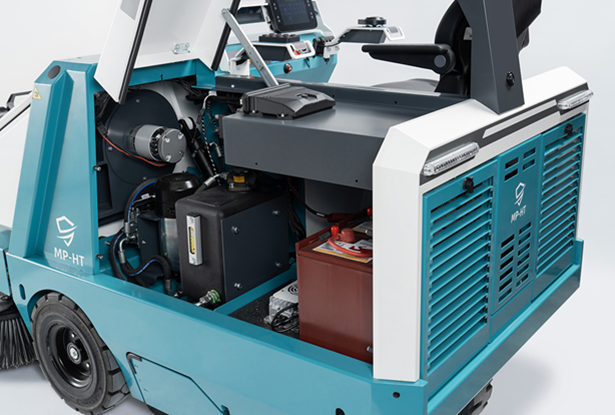
Do not discharge your battery to more than 80% depth of discharge. This safety factor will eliminate the chance of over-discharging and damaging your battery.
Always wear protective clothing, gloves, and goggles.
Do not smoke near batteries.
Keep sparks, flames, and metal objects away from batteries.
Use insulated tools when making battery connections.
Electrolyte is a solution of acid and water, so avoid skin contact. If acid contacts skin or eyes, flush with water immediately and contact a medical professional.
Ensure the cable connections to the terminals are properly tightened.
Do not lay objects on top of battery.
Always charge and handle batteries in a well-ventilated area.
Never add water, acid, or additives to a Trojan AES AGM battery.
Never remove or alter Trojan AES vent caps.
View safety datasheets for AES AGM, standard AGM, and other battery types >
Temperature considerations for AES AGM batteries
Temperature range for Trojan AES is (-40°F to 140°F) for discharge and –10°F to 140°F for charge.
Batteries operating at temperatures below 80°F (27°C) will deliver less than the rated capacity. For example, at 0°F (-18°C) the battery will deliver 50% of its capacity and at 80°F (27°C) it will deliver 100% of its capacity.
Batteries operating at temperatures above 80°F (27°C) will deliver more than the rated capacity but battery life will be reduced.
Packaging and shipping
It is important to minimize temperature variations between the cells. The batteries should have a minimum of 0.50” (12.7 mm) of space between them to allow for adequate airflow.
Avoid tightly packing batteries together, which will restrict airflow.
Recycling lead acid batteries
Lead acid batteries are the environmental success story of our time. Per the International Lead Association, in Europe and the USA, 99% of all battery lead is recycled. In fact, lead acid batteries top the list as the most highly recycled consumer products.
Trojan Battery supports proper recycling of your battery to keep the environment clean. Learn more about the Trojan Battery recycling program.
Troubleshooting
Contact Trojan technical support for troubleshooting your Trojan AES or AGM battery.
Call us at 800-423-6569, extension 3045, or reach out via email to the Trojan technical support team at technical@trojanbattery.com.